 English
 Arabic
 Chinese (Simplified)
 Dutch
Dutch French
 German
 Italian
 Portuguese
 Russian
 Spanish
The submit Global pilgrimage growth faces setbacks as geopolitical conflicts escalate appeared first on TD (Travel Daily Media) Travel Daily Media.

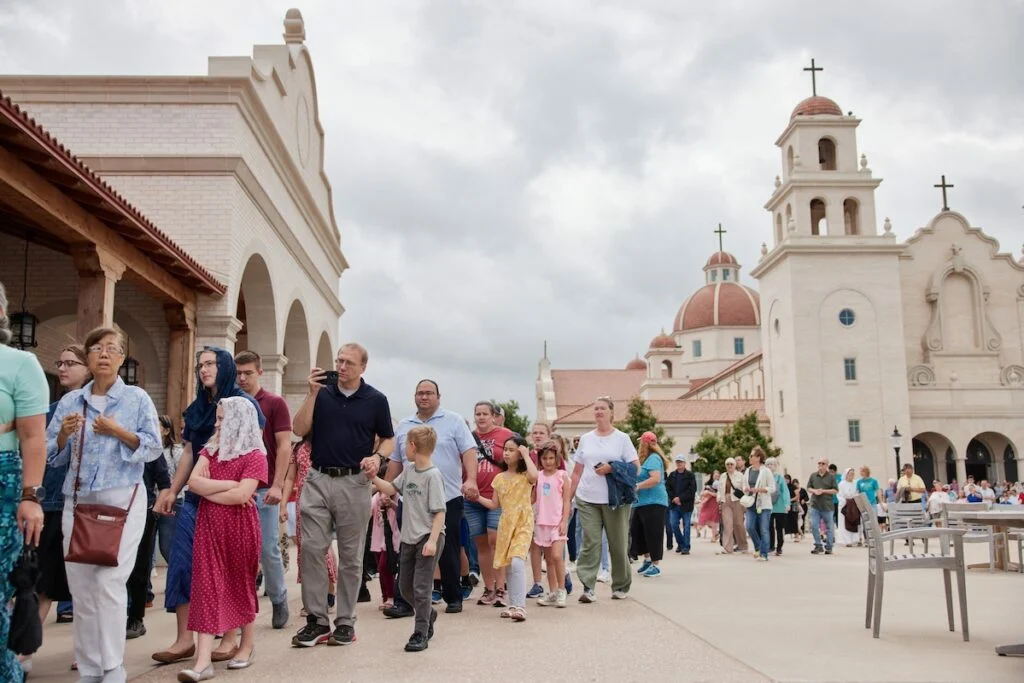
Faith-based journey, notably within the type of pilgrimage to at least one sacred website or a collection thereof, has drawn travellers the world over to pay homage to their gods, to provide thanks for blessings acquired, or to mourn these misplaced.
These could also be journeys to Mecca consistent with the Muslim mandate for pilgrimage; a Roman Catholic journey to Marian websites as an act of devotion; or perhaps a journey to the banks of the Ganges in India as a closing act of pious farewell.
All of those fall beneath the class of spiritual tourism, journeys which are extra for the soul than the senses.
Worth an estimated US$190.53 million as of end-2025, the worldwide spiritual tourism sector is a growth space for the worldwide tourism business, its surge fuelled primarily by a big improve in non secular shoppers, rising curiosity in spiritual heritage and pilgrimage websites, enlargement of non secular tourism infrastructure providers, authorities initiatives, as properly as promotional campaigns on the a part of one faith or one other.
However, with geopolitical battle on the rise, notably within the Middle East and elements of Eastern Europe, the growth of non secular tourism as an business could also be encumbered all through this 12 months.

The rising value of battle
In a report revealed simply final month, The Business Research Company forecast that the spiritual tourism market is predicted to see robust growth all through the subsequent a number of years.
According to the report:
“It will grow to $263.96 billion in 2029 at a compound annual growth rate (CAGR) of 8.5 percent. The growth in the forecast period can be attributed to growing interest in spirituality and wellbeing, growing international travel, rising awareness among consumers about travel destinations, low-cost air travel, increase in population, and rising demand for specialized faith-based travel packages and tours.”
Among the notable traits to observe within the area are developments in transportation infrastructure and connectivity, integration of expertise into spiritual tourism experiences, sustainable tourism practices, product launches, and growth of on-line reserving methods.
However, let’s be frank: all these can be for naught in mild of the continued battle between Israel and Palestine over Gaza, together with the unresolved battle between Russia and Ukraine.
Armed battle severely compromises the protection and safety of pilgrims and locals alike, thus placing a critical crimp in journey plans as tourism departments, journey businesses, and airways situation warnings in opposition to heading into affected areas.

Government budgets battle to maintain up with rising numbers of pilgrims
One of essentially the most distinguished spiritual pilgrimages globally is the annual Hajj, the as soon as in a lifetime journey mandated for all grownup Muslims.
As a compulsory act of religion, the Hajj is often held throughout the sacred month of Dhul Hijjah, the twelfth and closing month of the Islamic lunar calendar, and is noticed with fervent prayer, sacrifice, and deep non secular reflection.
Given the price of the Hajj which simply runs to US$9,000 for an unusual particular person, many Muslims battle to save lots of to make the journey no less than as soon as of their lives.
As a outcome, the price of the journey and the following devotional actions are typically shouldered by philanthropic organisations like ikhlas.com, the pilgrimage arm of Capital A, and even by governments in Muslim-dominant international locations.
Throughout the previous decade, nevertheless, budgetary constraints and different points have made a number of governments in South Asia, North Africa, and the Middle East withdraw their help for pilgrims or impose measures like a lottery system that limits the variety of eligible pilgrims per 12 months.
Among the nations which have stopped subsidising journeys for pilgrims are:
- Egypt As of sixth January, the Egyptian authorities has ended the provision of government-funded pilgrimage slots for impoverished residents.Owing to budgetary constraints since 2020, the federal government has shifted to an digital lottery system to make sure transparency, and people chosen by the system are required to pay for the journey via authorised centres;
- India The largest nation in South Asia ended Hajj subsidies in 2018, the context behind which concerned accusations that the subsidy was getting used to woo Muslim voters all through the nation, as properly as these relating to pandering to ethnic minorities. For almost eight years now, funds that will have initially been put aside for the Hajj are getting used to fund academic initiatives for ladies and women; and
- Nigeria A budgetary deficit amplified by spiritual discord additionally prompted Nigeria to declare the tip of Hajj subsidies in October 2024 and the matter was ratified in February 2025 when diminished fares had been introduced for pilgrims flying in a foreign country.
Meanwhile, whereas not precisely subsidising pilgrims’ journeys to Mecca, Pakistan and Bangladesh have lengthy operated Hajj initiatives which allow people to pay for the price of the pilgrimage in installments, typically interest-free to be much less of a monetary burden.
While not precisely a free experience, these initiatives give residents a good shot at having the ability to carry out the Hajj on their very own phrases.

Not out of the woods but: well being stays a priority even post-COVID
Budgetary points apart, the matter of public well being is one other factor being considered with regard to non secular tourism.
Too typically, pilgrimages, even ones held domestically, entails the presence of huge crowds in a comparatively small house, opening up a big potential for contagion to happen.
Asian and European church buildings, particularly these frequented for Roman Catholic and Eastern Rite devotions, have resorted to the easy act of social distancing; nevertheless, this generally is a problem to implement throughout key factors within the church calendar like Easter and Christmas or the feast days of notably revered saints.
Masking, in fact, is the course of prudence for many individuals who have to navigate via throngs; however even that is challenged, notably by hard-core anti-vaccine advocates from varied elements of the world.
To fight this, some governments have beneficial medical screening of their dwelling international locations for these making their method over for a pilgrimage.
Saudi Arabia, particularly, issued an advisory for mandatory health screening and vaccination for pilgrims previous to their journeys, together with a listing of these whose situations could stop them from absolutely experiencing key rites; these embody the aged, these with continual well being situations, and people presently present process or who’ve just lately accomplished a course of chemotherapy.
Among Catholics, whereas vaccinations will not be strictly required, pilgrims are requested to avail of travel insurance previous to their journey as surety within the occasion of sudden sickness or accidents requiring in depth medical consideration.
For pilgrims of any denomination, nevertheless, notice that the World Health Organisation offers specific guidelines for safeguarding their well being earlier than, throughout, and after their non secular sojourn.

Potential alternate options, digital and in any other case
In the almost three years of the pandemic, varied faiths noticed the rise of digital pilgrimages whereby the trustworthy might go surfing to official web sites for key spiritual venues such as Lourdes, Fatima, and Guadalupe, enabling them to participate in devotions regardless of the shortcoming to journey in particular person.
The idea of digital pilgrimages goes past Catholicism, as there are alternatives out there for Buddhists and Hindus, a few of that are supplied via on-line platforms like Temple 360.
Even now within the post-pandemic age, digital pilgrimages serve as devotional aids for worshippers, enabling them to discover their spirituality with out leaving the consolation of their houses and, within the case of the infirm and aged, while not having to compromise their well being.
It may very well be that, with developments in experiential applied sciences, digital and augmented actuality might assist house-bound devotees expertise a location for themselves.
At the identical time, VR and AR might even have the next advantages:
- Reduce the potential for contagion in pilgrimage websites as these might considerably lower the variety of folks inside them;
- Significantly diminish every location’s carbon footprint as much less vacationer site visitors will imply much less greenhouse fuel emissions, littering, and even cleaner water; and
- Mitigate the opposed results of overtourism as much less vacationers imply a discount in any pressure on native assets, considerably much less frequent site visitors jams, and protect the sanctity of sacred websites.
Countries which are dwelling to massive spiritual denominations may contemplate the idea of home tourism within the context of pilgrimage, particularly if there are areas particular to a devotion or patron.
Such examples might embody:
- The Philippines The predominantly Roman Catholic Asian nation provides pilgrimage routes to church buildings hailed as heritage websites through the holy days of Lent main as much as Easter. Religious festivals such as these for the Black Nazarene and the Infant Jesus in January lead folks to Quiapo in Manila, as properly as different areas within the capital and the provinces of Cebu, Iloilo, and Leyte; whereas May brings Marian devotion to the fore within the cities of Manaoag, Pangasinan and Antipolo, Rizal;
- Japan While Shinto is basically a worldwide minority, this endemic faith provides pilgrimages to a few key websites: the dual cities of Yoshino and Omine, Koya-san, and Kumano Sanzen. Hailed among the many world’s great sacred sites beneath the UNESCO World Heritage Convention, these websites have a good time Shinto doctrine’s give attention to respecting nature, one thing that’s intertwined with one other main faith within the nation: Zen Buddhism; and
- Vietnam The ecumenical nature of Vietnamese society could be seen within the varied faiths practised relying on which a part of the nation it’s possible you’ll end up in, as Buddhism, Christianity, Confucianism, and Hinduism all made their mark on the folks. But it’s the syncretic faith recognized as Cao Dai that piques the curiosity of each the native trustworthy and overseas guests, drawing each to its Holy See in Tay Ninh, northwest of Ho Chi Minh City.
As we’re however in the beginning of the 12 months, it stays to be seen how the destiny of non secular tourism globally will play out.
However, one factor is for positive: not even the specter of battle, contagion, and monetary constraint can cease the religious from expressing their religion via journey.
The submit Global pilgrimage growth faces setbacks as geopolitical conflicts escalate appeared first on Travel Daily Media.
Source link
